
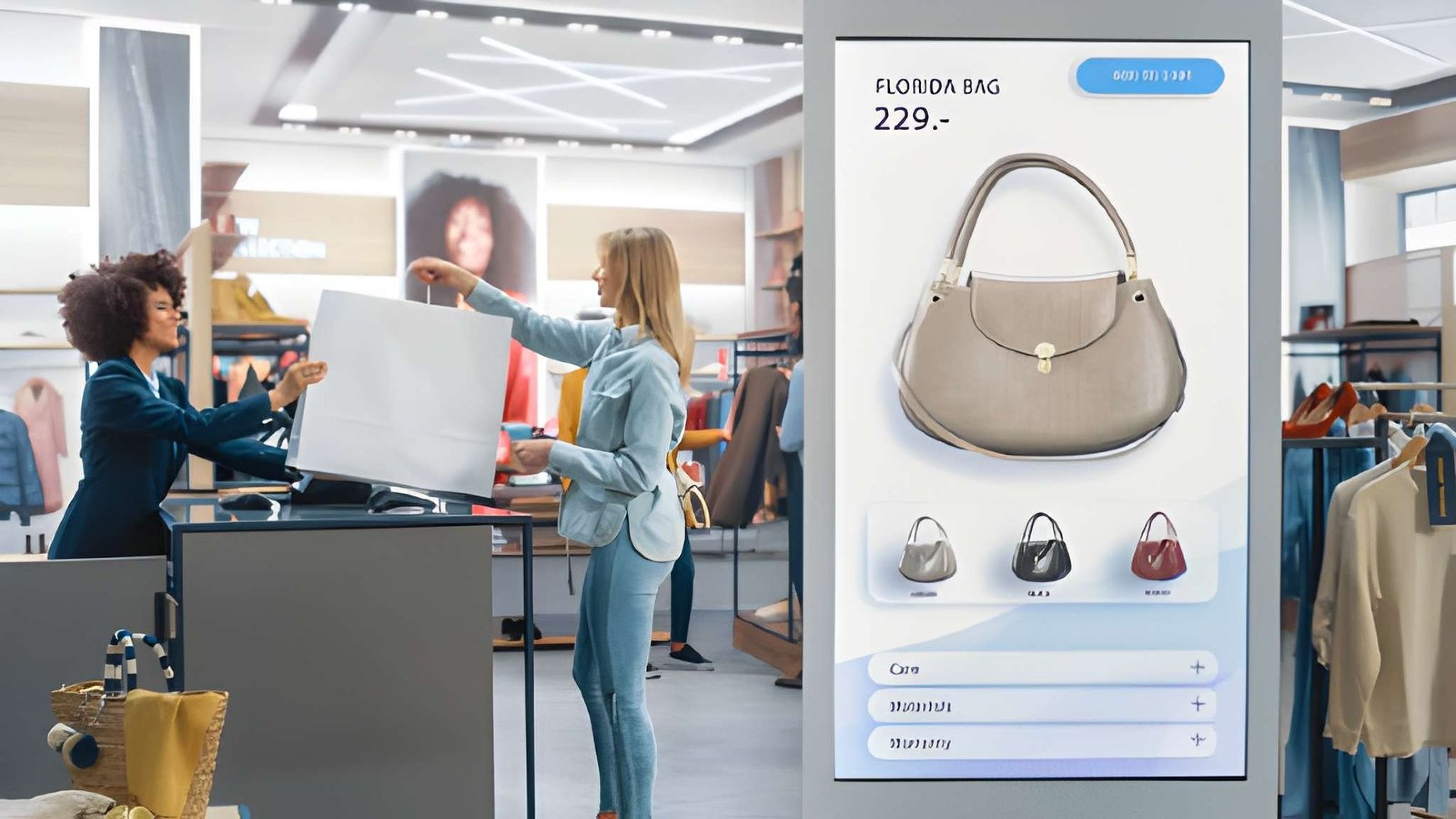
Before making an online purchase, all shoppers want clarity, certainty, and confidence in their purchase. This is especially true for businesses that sell high-ticket items, luxury goods, or customizable products.
However, there remains a significant gap between customer expectations and purchase behavior, causing serious challenges for e-commerce businesses, such as high operational costs. This is where 3D product configurators are reshaping the buying journey.
By combining interactive visualization, real-time customization, and rule-based logic, these tools help customers understand exactly what they are buying, well before checkout. This article explores how 3D product configurators solve critical e-commerce pain points and why they are becoming a strategic investment rather than a fancy visual enhancement tool.
E-commerce Challenges
Two of the most rapidly growing challenges faced by the e-commerce industry are the increasing return rates and low purchase confidence. This is especially true for brands selling complex, high-value, or customizable products, like jewelry and tailor-made clothing. Together, these two issues create a costly loop: customers hesitate before buying, and when they do purchase, unmet expectations often result in returns.
Product Returns and Operational Cost
In e-commerce, this problem is commonly measured using the return rate — a metric that shows the percentage of orders customers send back after purchase. The math is simple: all you need to do is divide the total number of returned orders by the total number of fulfilled orders, then multiply the result by 100.
Product returns give birth to a high hidden operational cost, often inevitable because of unmet expectations. According to a 2025 report by the National Retail Federation:
- One in five online retail orders comes back as a return, which is two to three times more than in-store sales
- Gen Z customers are most likely to return orders
- 82% of the buyers say that a free or generous return policy is a major consideration in their purchase decision
- 19% of online retailers say that processing and paying for returns takes too long and hurts business operations
Moreover, Invespro reports that 92% of consumers are more likely to buy again if the retailer offers easy returns, with 79% of the customers demanding free returns. A detailed report by Dealnews highlights the most common items that are returned by customers in the U.S., including:
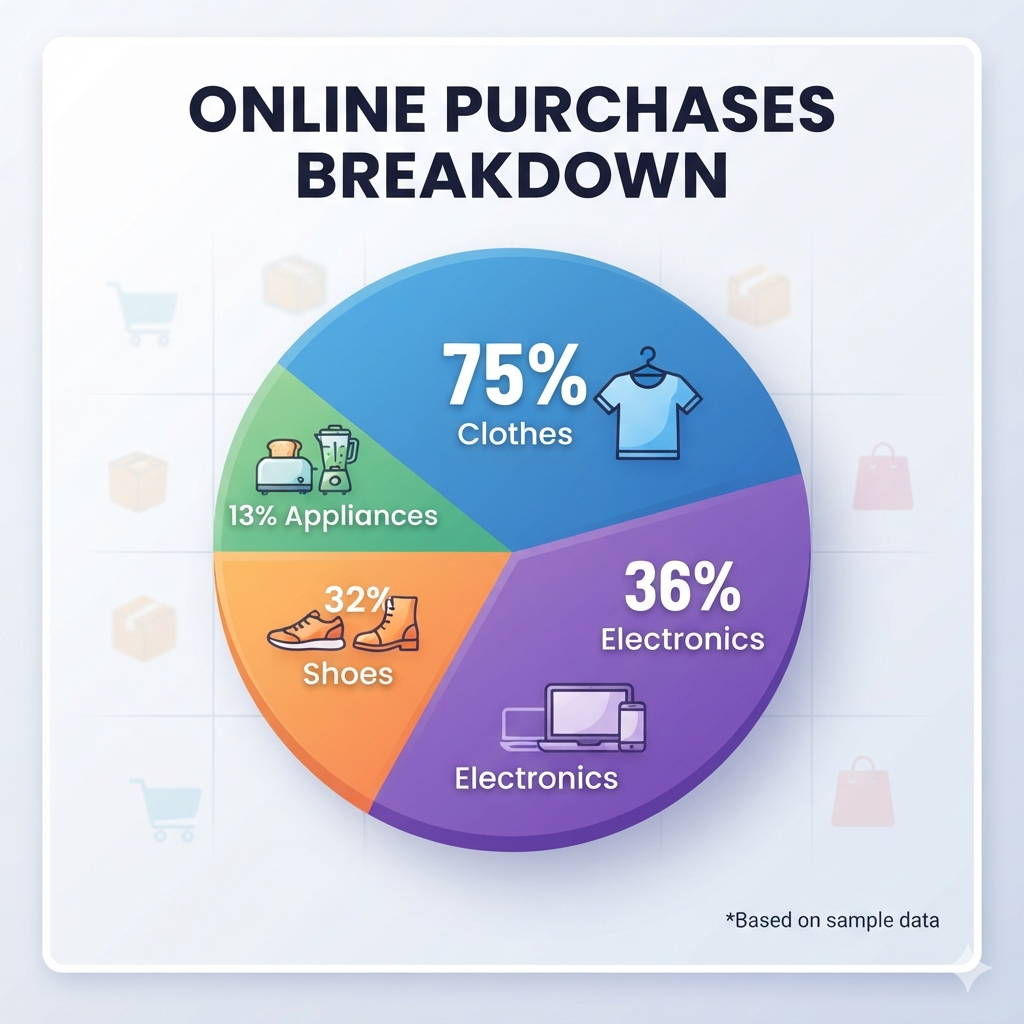
For each return, a hefty cost is carried over to the shoulders of e-commerce retailers, such as reverse logistics, inspection, repackaging, resale loss, and in many cases, total product write-offs.
Low Purchase Confidence: The Root Cause?
There are some obvious and inevitable reasons as to why customers may abandon their e-commerce shopping carts, such as:
- Random scrolling spree
- Price comparisons
- Exploring gift options
- Saving items for later
However, all these are uncontrollable by the business itself. This is where purchase confidence comes into the picture, contributing to a high cart abandonment rate. Baymard reports that a major percentage of customers who abandon their shopping carts are doing so due to "uncertainty" over the product.
So, when customers are asking questions like "Will this look good on me?" they are either going to leave without making the purchase or buy the product and return it later. According to reports, 83% of online shoppers want to see detailed and rich product descriptions to be certain of their purchase. Yet, modern e-commerce businesses are still relying on flat visuals and minimally interactive user experiences.
What is a 3D Product Configurator?
A 3D product configurator is an interactive digital tool that lets customers visually customize a product in real time. The tool allows shoppers to see the exact outcome of their selections before making a purchase. At its core, a 3D product configurator combines real-time 3D visualization, configuration logic, and e-commerce integration to replicate the in-store buying experience.
Modern 3D product configurators are not just visual tools. They are often powered by rule-based configuration logic that ensures only valid, manufacturable, or compatible combinations can be selected. This prevents customers from ordering products that cannot be built, shipped, or used as intended, one of the most common causes of returns for configurable goods.
Online shoppers have seen a lot of flat visuals, static images, wordy descriptions, and drop-down menus when purchasing products online — especially customized items. However, businesses that realize the importance of user experience and product certainty in boosting e-commerce sales and reducing return rates integrate advanced tools like 3D product configurators.
From a customer's perspective, 3D configurators answer very important questions like:
- What will the product look like (inside out)?
- Will the product fit me?
- Have I made the right selections?
From a business perspective, a 3D product configurator encourages users to make the purchase with confidence, not only boosting sales but also reducing the chances of returns and hefty operational costs followed by it.
3D Product Configurators vs Traditional Product Pages
There is a widely used standard approach found across most e-commerce product pages. Traditional product pages rely heavily on static visuals and descriptions. This might work for some products, such as one-size-fits-all products with little to no variations offered.
On the flip side, 3D product configurators introduce an interactive, real-time decision-making experience. This difference truly impacts how customers view products, evaluate options, and decide whether to purchase or return.
Let's compare the two different approaches to understand each of their business impact in today's highly advanced tech-driven business world:
| Customer Experience | Traditional Product Pages | 3D Product Configurators |
|---|---|---|
| Product Visualization | Static images and limited angles | Interactive 3D and 360° views from all angles |
| Customization Experience | Dropdowns and option lists | Real-time visual customization updates |
| Customer Understanding | Relies on imagination and interpretation | Clear, visual representation of the exact product |
| Purchase Confidence | Lower due to high involvement of assumptions | Higher due to visual validation before checkout |
| Risk of Ordering Errors | Higher due to the free-form approach | Lower due to rule-based configuration logic |
| Expectation Accuracy | Often mismatched with the final product | Closely aligns with the final delivered product |
| Return Likelihood | Higher due to issues related to unmatched expectations | Lower due to accurate pre-purchase visualization and understanding of the product |
| User Engagement | Passive browsing experience | Active, interactive product exploration |
Key Features of Notionsify's 3D Product Configurator and Problems it Solves
E-commerce businesses are yet to realize the full potential and business impacts of integrating a powerful 3D product configurator like Notionsify into their product pages. It can appear to be a fancy visual tool that is meant to enhance the page's outlook.
However, these tools are structured systems designed to solve very specific breakdowns in the online purchasing journey. In particular, e-commerce losses most typically do not happen due to product failures, but at the decision-making level.
So, to understand how 3D product configurators make a measurable business impact, it is important to break down the key features. The table below breaks down the most important capabilities of 3D product configurators and how each one directly addresses a specific e-commerce challenge, such as high returns, low purchase confidence, and customized ordering errors.
| Feature | What It Is | Business Problem It Solves |
|---|---|---|
| Interactive 3D Visualization | Allows users to rotate, zoom, and inspect products from every angle in real time | Reduces buyer uncertainty caused by unappealing or misleading static images |
| Real-Time Customization Updates | Instantly reflects changes like color, size, material, or components | Eliminates guesswork, ensures expectations match |
| Photorealistic Rendering | Displays high-fidelity textures, lighting, and materials | Builds trust by showing how the final product will actually look |
| 360° Product Views | Offers a complete view of the product from all sides | Reduces "surprise" elements that often lead to returns |
| Rule-Based Configuration Logic | Blocks incompatible or invalid option combinations | Prevents inconvenient and costly ordering and printing errors |
| Guided Configuration Flow | Leads users step-by-step through complex choices | Reduces cognitive overload and the chances of cart abandonment |
| E-commerce & Pricing Integration | Updates prices dynamically as customization options change | Improves transparency and reduces checkout friction |
Interactive 3D and 360° Views Reduce Buyer Uncertainty
According to market reports, online shoppers have an increasing demand for high-quality visual content that helps them understand the product better. A 3D product configurator lets e-commerce sites easily integrate multi-angle viewing for users, with a 360-degree view and easy zoom-in and zoom-out functionality that performs better than video content.
So, instead of relying on a passive browsing experience, customers can enjoy an immersive one by exploring the products, zooming in on details, and examining every angle. This capability instantly transforms a flat and passive browsing experience into an immersive and active one.
According to HubSpot, interactive content such as 3D visuals can increase user engagement significantly, with users spending up to 47% more time on pages featuring interactive elements compared to static content. However, the increase in engagement and/or time spent on page is not a mere vanity metric. Instead, it directly tackles a huge problem faced by online shoppers: product uncertainty.
Photorealistic Previews Build Trust and Confidence
Ultimately, trust is precisely what drives conversion. So, 3D visuals and 360-degree views can help shoppers understand a product, but there is still a gap left behind. The buyers still don't know how accurate, realistic, or exact the product visuals are.
Photorealistic previews address this issue by removing ambiguity. They take "imagination" out of the equation with systems that generate highly accurate visual representations of that exact version. This includes realistic material rendering (such as leather, fabric, metal, or wood), lighting effects, and shadow behavior. Ultimately, these details also enhance perceived quality.
Prevent Costly Order Errors With Rule-Based Product Configuration
There are e-commerce product pages and sites that are still using free-form order selection processes. This leads to customers selecting customization options and combinations that are impossible or beyond the business's offerings. What happens next? The business has to cancel the order, ship a disappointing or inaccurate product, and then handle return costs and reputational damage.
This is where rule-based product configuration steps in; the system actively guides users through acceptable configurations. For example, if a specific material is not available in a certain size, or if two components cannot work together, the system automatically disables or prevents that combination in real time. This creates a guided buying experience that is built on pre-defined business logic and rules.
The Business Impact
The real value of 3D product configurators is not only in improving how products are presented but in how they directly influence core e-commerce performance metrics. Letting customers visualize and validate a product order before finalizing the purchase helps e-commerce businesses see improved business metrics like engagement and sales.
Research consistently shows that interactive 3D and AR experiences significantly improve both customer confidence and purchase behavior, with some studies reporting up to 94% higher conversion rates and substantial reductions in return rates.
Below is a breakdown of how these business benefits actually materialize.
Reduced Product Return Rates
One of the most direct impacts of 3D product configurators is the reduction of return rates. Studies show that businesses implementing 3D visualization and configurators can achieve return rate reductions of up to 30–40%.
Higher Conversion Rates
Conversion rate improvements are one of the most consistent outcomes of implementing 3D configurators. When customers can explore a product in detail, they are much more likely to be confident in their purchase decision.
Increased Average Order Value (AOV)
3D product configurators naturally encourage customers to explore more options. When users can visually test different materials, features, or premium upgrades in real time, they are more likely to select higher-value configurations. Ultimately, this behavior increases average order value because customization becomes an engaging part of the buying experience rather than a technical decision.
Reduced Customer Support Load
Another major business impact of 3D product configurators is the reduction of pre- and post-order requests. A good configuration tool answers most questions for the customers before they make the purchase, reducing the load on the customer support department. This also leads to fewer disputes, fewer cancellations, and smoother fulfillment workflows.
Greater Chances of Repeat Purchases
When customer expectations are accurately aligned with the delivered product, satisfaction naturally improves. This leads to:
- Fewer negative experiences post-purchase
- Higher trust in the brand
- Stronger long-term loyalty
Over time, this creates a compounding effect: better experiences lead to more trust, which leads to higher long-term value.
Which Industries Benefit from 3D Product Configurators?
While the number of industries that are making use of 3D product configurators is growing, there are some distinct ones which successfully integrated them into their e-commerce process.
Furniture and Home Decor
Furniture is one of the strongest use cases for 3D configurators. This is because buyers, whether in the online or in-person shopping space, need to judge furniture products in terms of:
- Size
- Color
- Material
- Spatial fit
- Maneuverability
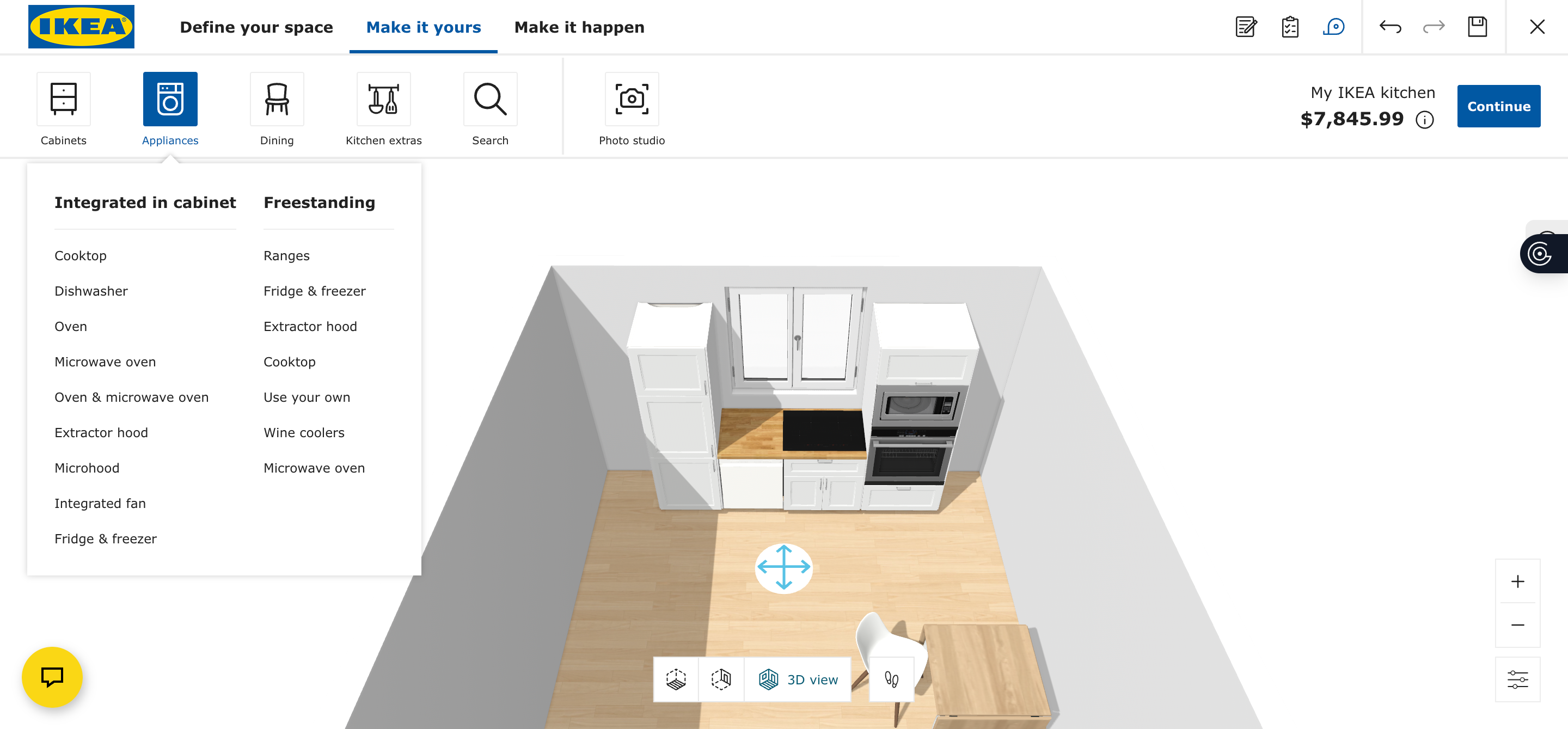
It is a long-term choice they have to make. Therefore, forward-thinking modern brands like IKEA have already found a solution to low customer confidence and uncertainty — a 3D product configurator for furniture. The globally recognized furniture and home decor company has adopted 3D and AR-based visualization tools to help customers preview furniture in real spaces before purchase.
Automotive Industry
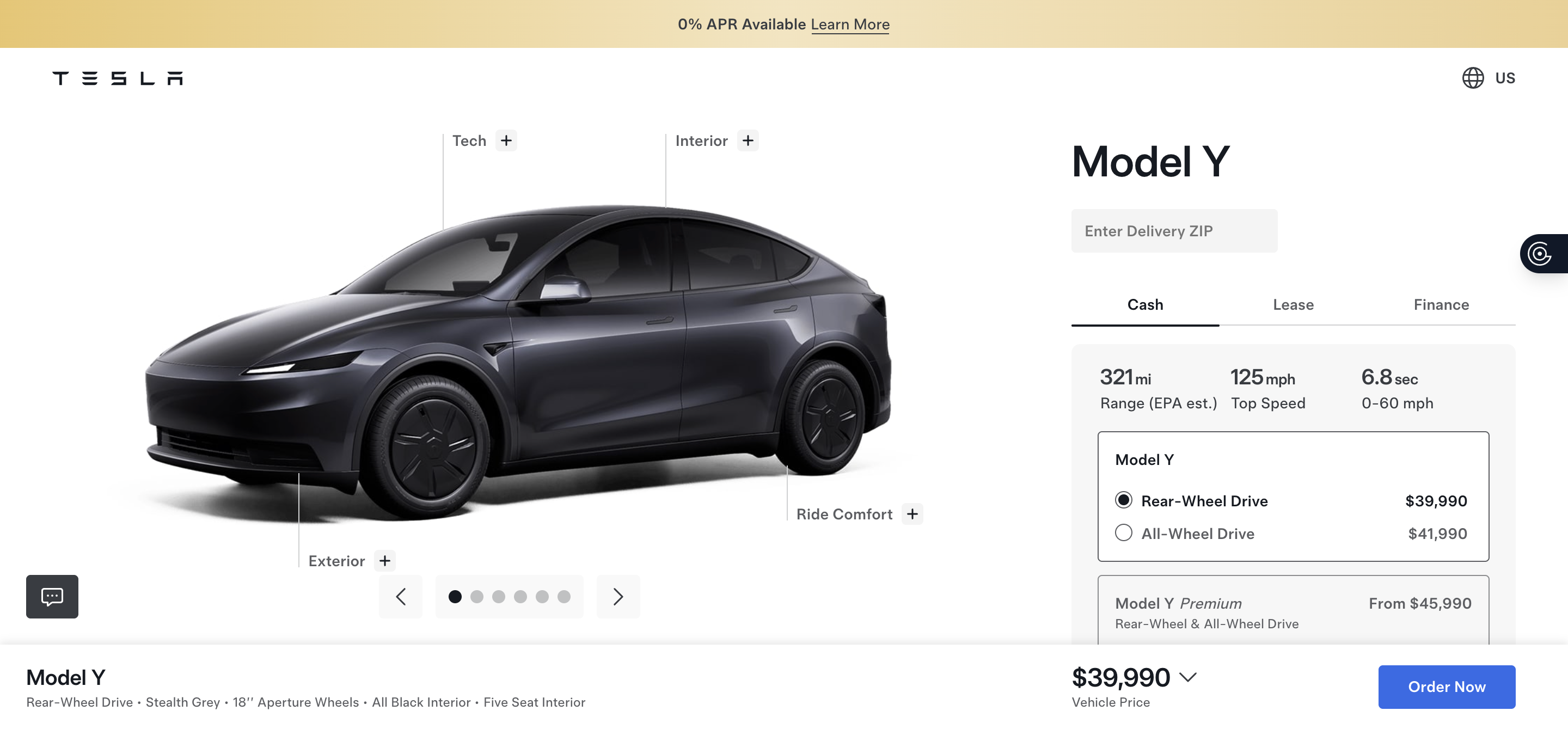
From rims to interiors, automotive companies can help their customers shop for the exact vehicle that meets their expectations. For example, Tesla's online car design studio and configurator enable users to customize models in real time with immediate visual feedback. Since automotive and related products are high-ticket sales, a visual tool like the 3D product configurator can easily increase confidence and certainty in shoppers.
Fashion, Apparel, and Footwear
An interactive user experience is no longer optional for fashion and apparel brands to stand out in a market loaded with alternatives. In the digital space, buying fashion products has become much more complex than it ever was.
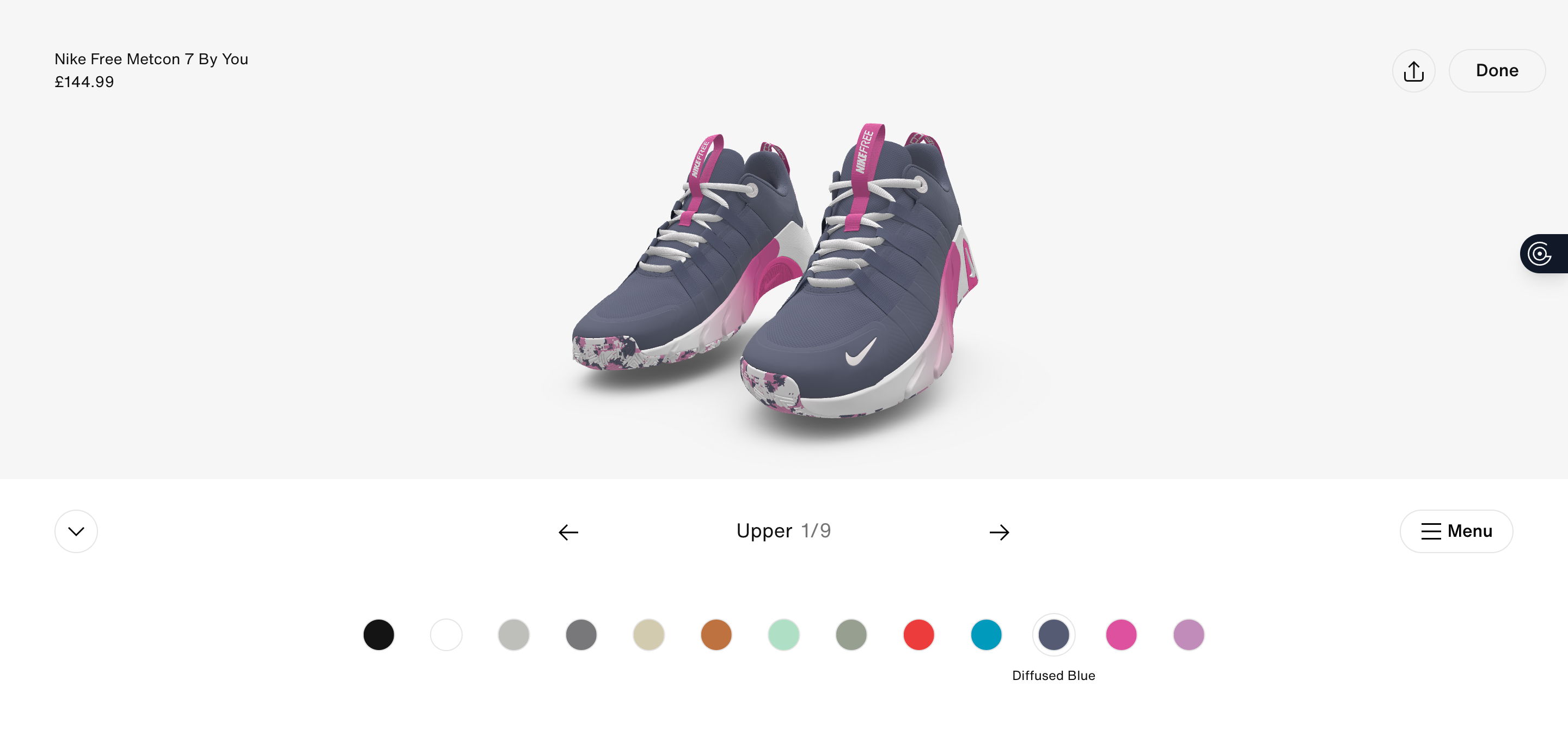
Most of the online shoppers struggle with finding the right color, the right fit, or the right style for themselves. Intelligent and future-proof brands like Nike have picked up on these gaps and already laid a strong foundation by introducing shopping experiences like the "Nike By You" product configurator. It involves the buyer in the design process, keeping them engaged from product browsing to selection to customization, till check out.
Jewelry and Luxury Goods
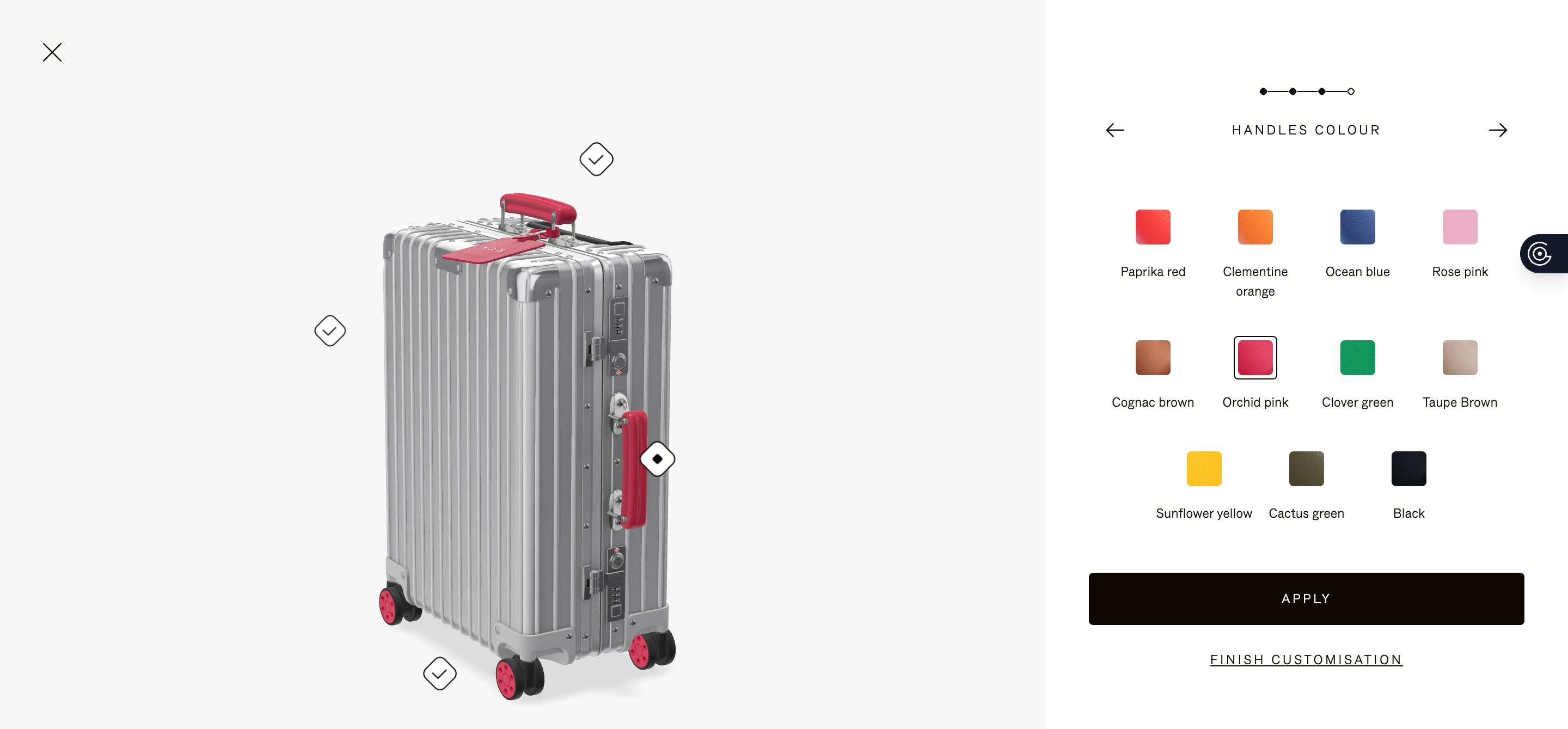
Luxury and jewelry brands use configurators to help customers visualize personalized designs before purchase. For example, Rimowa's Unique feature allows for customization and visualization for selected products, improving confidence in high-value purchases. For expensive and customized goods as such, buyer confidence is essential to curtail return rates and associated costs.
Final Thoughts
High return rates and low purchase confidence are real problems in the e-commerce landscape. These issues are no longer inevitable, and businesses cannot afford to ignore them anymore. Therefore, advanced tools like 3D product configurators address both by eliminating uncertainty at the decision-making stage, where most e-commerce losses originate. Through interactive 3D views, photorealistic previews, and rule-based configuration logic, businesses can align customer expectations with the final product before the order is placed.